


How Dentures and Implants Compare In the Long Run
Dentures and dental implants both replace missing teeth effectively, but they age differently over the years. What looks like a simple upfront choice can have a bigger impact down the...
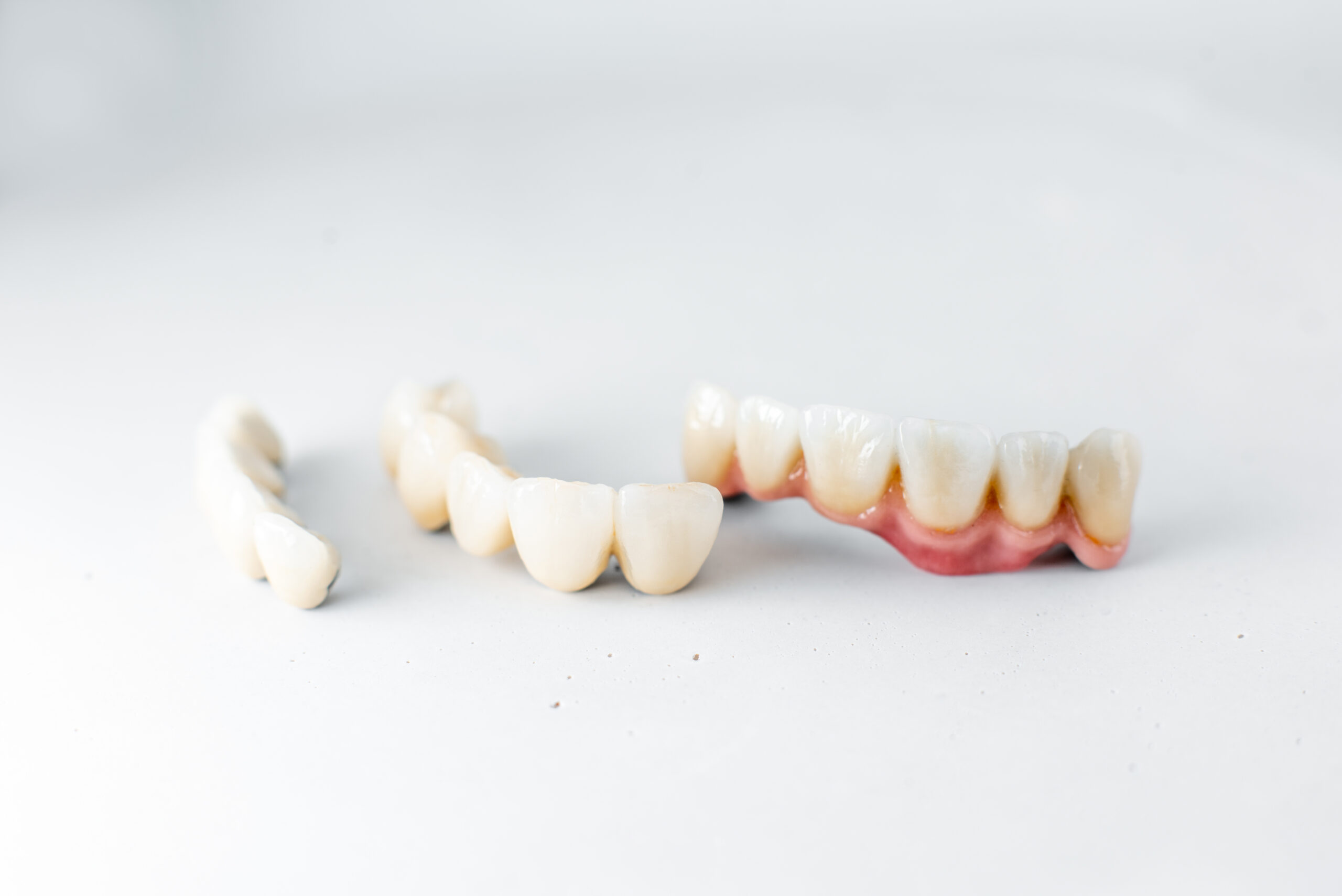
Two of the most common options for replacing multiple teeth are partial dentures and dental bridges. They serve a similar function, but work differently.
If you are weighing these choices, it helps to understand how each one works and what daily life with each option may look like.
A partial denture is a removable dental appliance that replaces one or more missing teeth, but not a full arch of teeth. It usually includes replacement teeth attached to a gum-colored base. In many cases, it also has small clasps or connectors that help hold it in place by attaching to nearby natural teeth.
Partial dentures are often used when a patient still has several healthy natural teeth remaining. They fill the gaps left by missing teeth and can be taken out for cleaning and while sleeping.
A dental bridge is a fixed restoration used to replace one or more missing teeth. An artificial tooth or teeth are anchored to crowns placed over the natural teeth on either side of the gap. In some cases, a bridge may also be supported by dental implants.
Traditional bridges are fixed into place, which means you do not remove them at home. Once placed, they function much like natural teeth and stay in the mouth full time.
Dental bridges are often a popular option for patients who want something more stable than a removable appliance and who have strong support teeth next to the missing area.
While both are designed to restore function and appearance, they differ in fit, cost, maintenance, durability, and who they are best for.
The biggest difference between partial dentures and dental bridges is simple: partial dentures are removable, while dental bridges are fixed.
That one distinction affects many parts of treatment and daily life, and if both are an option for you, this may be an important consideration. With a partial denture, you remove the appliance to clean it. Some patients prefer that flexibility, while others find it less convenient and would rather have a tooth replacement that stays in place and feels more secure.
When it comes to replacing several missing teeth, the location and number of gaps play a big role in determining the best option.
If you are missing multiple teeth in a row, either option can be designed to fill that space, provided there are healthy teeth or implants on either end to serve as anchors for a bridge. Bridges are most effective when the gap is limited to one area of your mouth, but they can only replace 4-5 missing teeth.
For patients with missing teeth in different locations within the mouth, or who are missing more than 4 teeth, partial dentures may be a better choice. A custom-made partial denture can replace multiple teeth in different positions with one appliance. A partial denture can also replace many more teeth than a single dental bridge.
Both partial dentures and bridges can improve the look of your smile, but there are differences in how natural they may appear. A dental bridge usually offers a more seamless look. Because it is fixed in place and custom-made to blend with the surrounding teeth, it often feels and looks more like natural teeth.
A modern partial denture can also look very much like natural teeth. However, some types may have visible metal clasps, and the appliance may feel a bit bulkier. That said, most partial dentures are not visible during normal daily interactions.
A dental bridge is generally more stable when chewing and speaking. Since it is secured in place, it does not shift the way a removable appliance sometimes can. Many patients are able to adjust quickly and will soon no longer notice the bridge.
Partial dentures can restore chewing ability and speech as well, but they may take more time to get used to. At first, they can feel larger or less natural. That said, many people do very well with partial dentures and appreciate having a non-surgical, practical solution.
Partial dentures are usually less expensive upfront than dental bridges. They are often considered a more budget-friendly way to replace multiple missing teeth, especially when teeth are missing in different parts of the mouth.
Dental bridges tend to cost more because they are fixed restorations that require more detailed preparation. Crowns on neighboring teeth or dental implants to support the bridge can also raise the overall cost.
With a partial denture, daily cleaning is very important. You remove it, brush it gently, and soak it as directed. You also need to clean your natural teeth and gums well, since plaque can still build up around the supporting teeth.
With a bridge, you brush and floss around it while it stays in your mouth. Cleaning under and around the bridge takes a little extra effort. Your dentist may recommend other ways to floss to help keep the area clean.
Neither option is maintenance-free. The best choice often depends on which care routine feels more manageable for you.
Dental bridges are generally known for their strength and durability. With good care, many bridges last for years. Their lifespan depends on oral hygiene, bite pressure, and the health of the supporting teeth.
Partial dentures can also last well, but they may need adjustment or replacement sooner. Because they are removable, they can also be dropped, bent, or worn down over time. However, if they need to be replaced, it is less complex than replacing a bridge, which could require more complex dental work.
In general, bridges tend to feel more solid and long-lasting, while partial dentures offer flexibility and easier replacement if changes happen later.
Your dentist will assess the condition of your natural teeth, gum health, and bone structure to help you choose the approach that fits your needs and lifestyle.
A partial denture may be a good fit if you:
A dental bridge may be a better fit if you:
While some cases will dictate whether or not you are a candidate for both options, there is no one-size-fits-all answer.
The best way to decide is to have a thorough dental exam and talk through your options. We will evaluate your teeth, gums, and bone support, as well as your personal preferences, then recommend the option that fits your needs best.
Are you ready to talk about your tooth replacement treatments? Contact our office today to schedule a personalized consultation to learn more about your restorative dentistry options.