You replace your toothbrush every three to four months, just like your dentist recommends. So why does it matter how you treat it in between? After all, you’re going to toss it soon anyway, right?
Even though your toothbrush has a limited lifespan, the care you give it during those few months can make a real difference in your oral health. A well-maintained toothbrush works better, lasts longer, and keeps harmful bacteria from making their way into your mouth.
How Often Should You Change Your Toothbrush?
First, let’s take a step back with a deeper look at how often you should replace your toothbrush. Even with excellent care, toothbrushes wear out. Bristles can become frayed, bacteria can build up, and none of this is good for your smile. The American Dental Association recommends replacing your toothbrush, or toothbrush head in the case of electric toothbrushes, every three to four months, or sooner if the bristles become frayed or discolored.
Why Take Care of Your Toothbrush?
Why worry so much about your toothbrush if you are just going to throw it out anyway?
Neglecting your toothbrush can lead to more than a few unpleasant consequences. Bacteria thrive in moist environments, and a damp toothbrush is the perfect breeding ground. Studies have shown that toothbrushes can harbor millions of microorganisms, including bacteria that cause gum disease and cavities.
Every time you brush, you’re removing plaque, food particles, and bacteria from your teeth and gums. Some of that debris ends up on your toothbrush bristles. If you don’t rinse and store your toothbrush properly, the bacteria can multiply. The next time you brush, you could be reintroducing harmful microbes back into your mouth.
If your toothbrush isn’t drying properly or is stored in an unclean environment, it may also collect mold or mildew. Using a contaminated toothbrush can introduce harmful germs into your mouth, potentially leading to oral infections or illness.
Additionally, worn-out or poorly maintained bristles lose their effectiveness. Frayed bristles can’t clean your teeth as thoroughly, which means plaque and bacteria have more opportunity to build up. This increases your risk of cavities, gum inflammation, and bad breath.
How to Care for Your Toothbrush
Good toothbrush care doesn’t require much effort, but it does require consistency. Here are the best practices to follow.
Rinse Thoroughly after Every Use
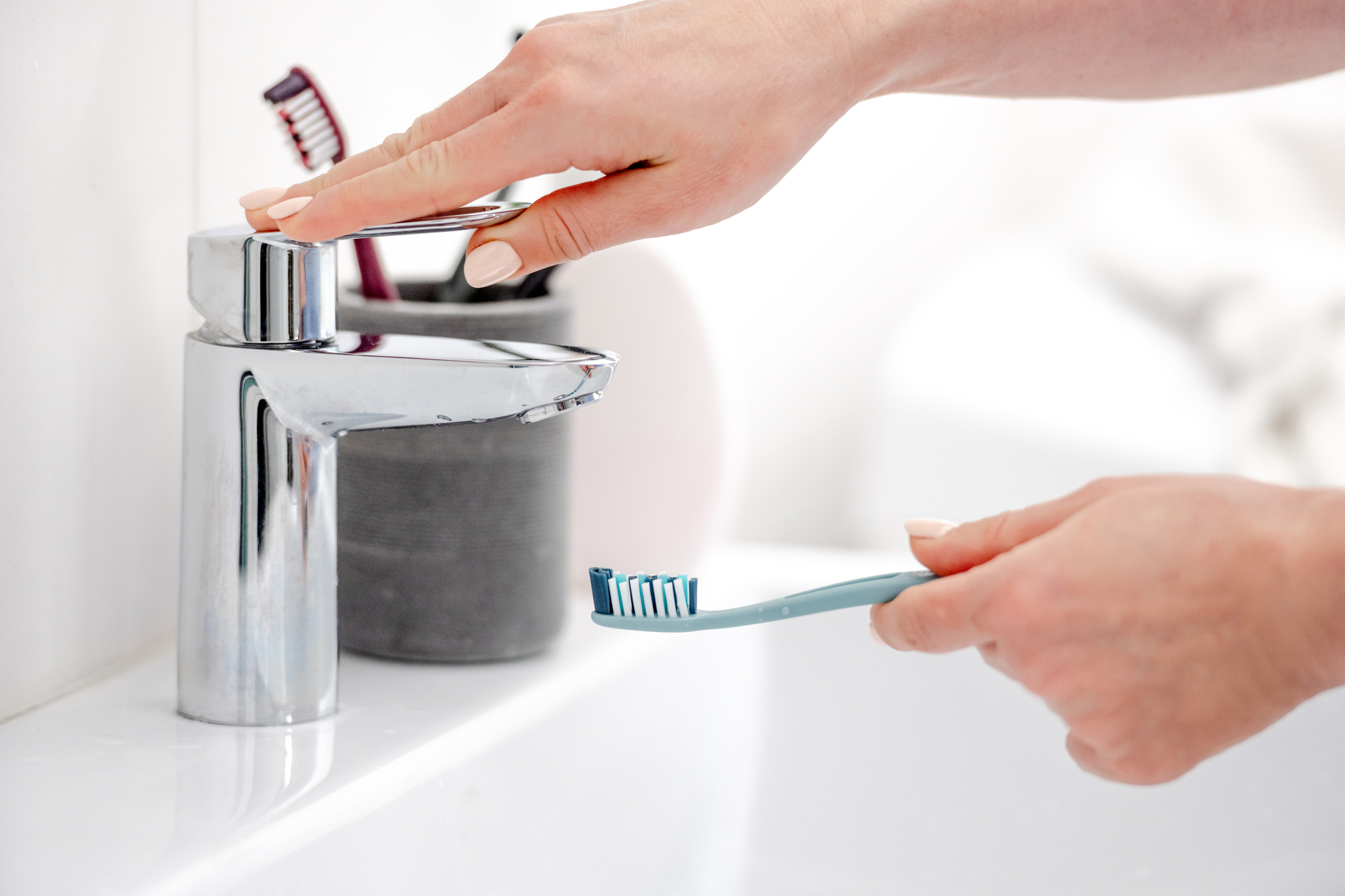
After brushing, rinse your toothbrush thoroughly under running water to remove leftover toothpaste and debris. Be sure to take your time to shake off as much excess water as you can.
Store it Upright
Don’t just lay your toothbrush on the countertop to wait for your next brushing session. Letting your toothbrush air-dry in an upright position is the best way to store it. This allows water to drain away from the bristles and helps prevent bacterial growth. Also, avoid storing it in a closed container or drawer while it’s still wet.
Keep it Separate
If you share a toothbrush holder with others, make sure it is the type of holder with individual slots so that the brush heads don’t touch. Cross-contamination can transfer bacteria between toothbrushes.
Don’t Share Your Toothbrush
Maybe this goes without saying, but it’s worth repeating anyway. Sharing a toothbrush can spread germs and infections, even among family members.
Small Habits Can Have a Big Impact
Taking care of your toothbrush is one of the simplest ways to protect your oral health!
If you have concerns about proper toothbrush care or anything to do with your oral hygiene routine, schedule an appointment and feel free to ask all of your brushing and flossing questions. We’re here to help, and we love talking oral hygiene!